
STUDIO TRUSS
2027 AIA Huron Valley Unbuilt Project Merit Award Winner


Ann Arbor, MI (2024, unbuilt)
Project Size: 600 SF
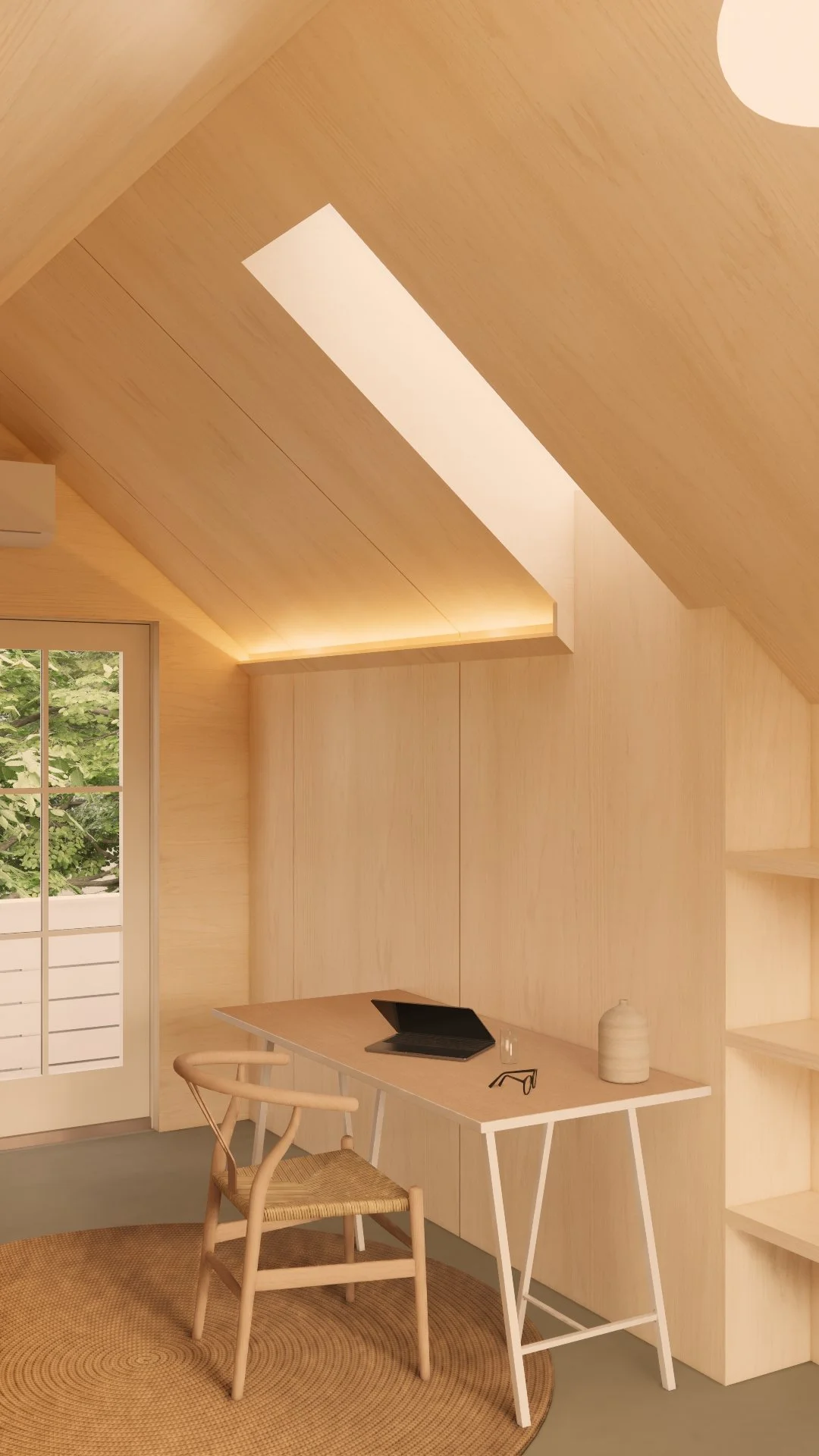
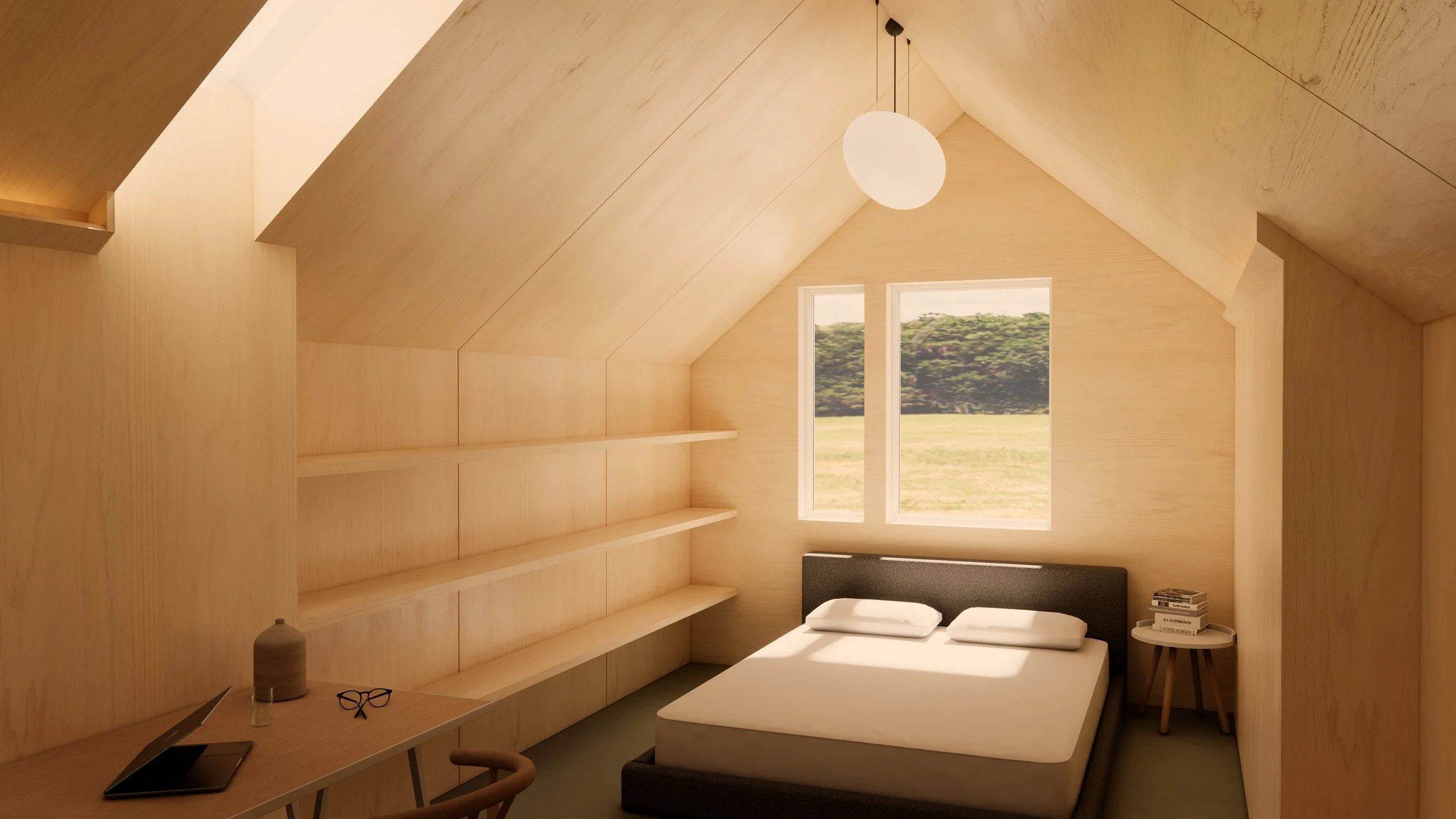
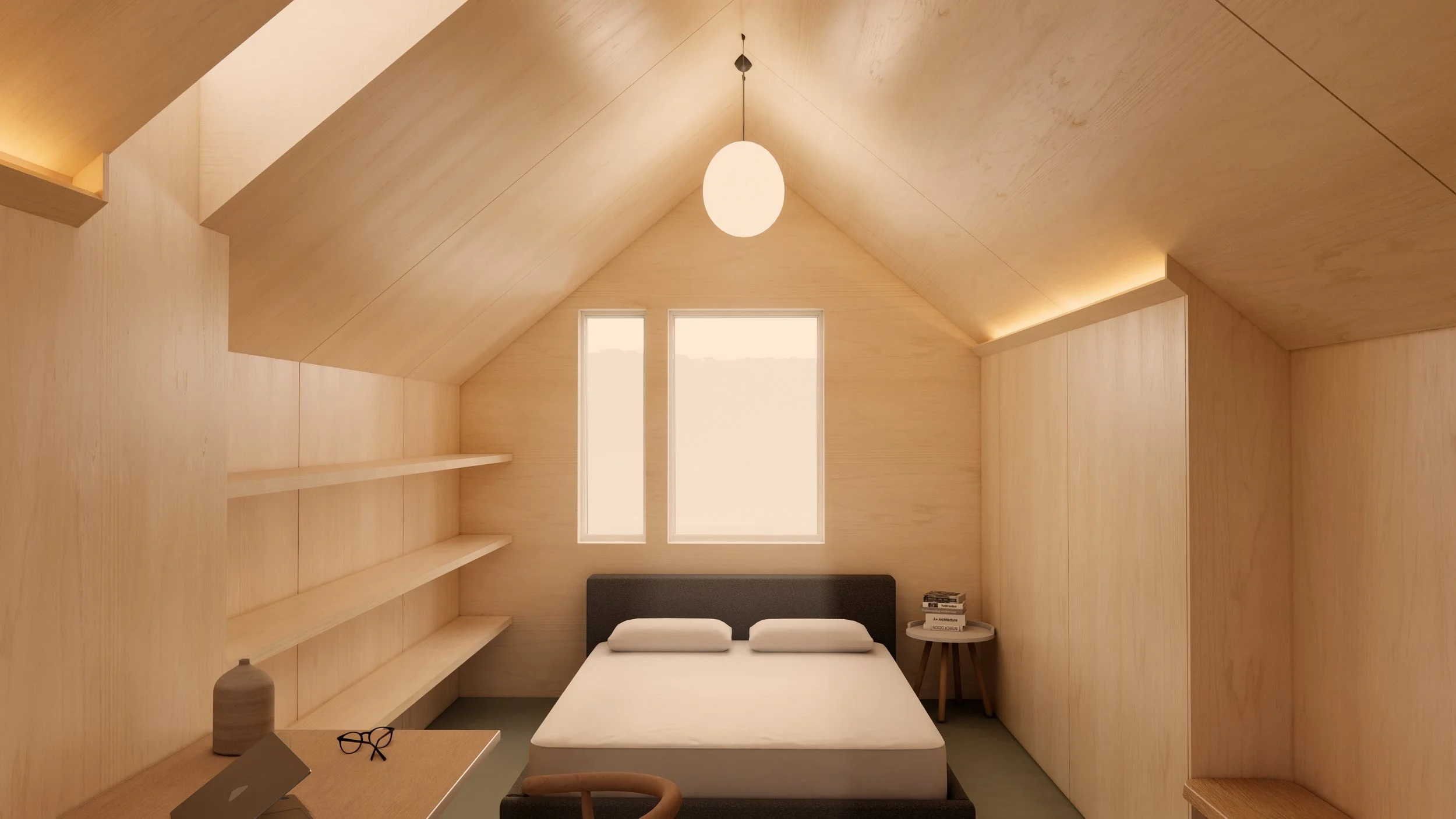
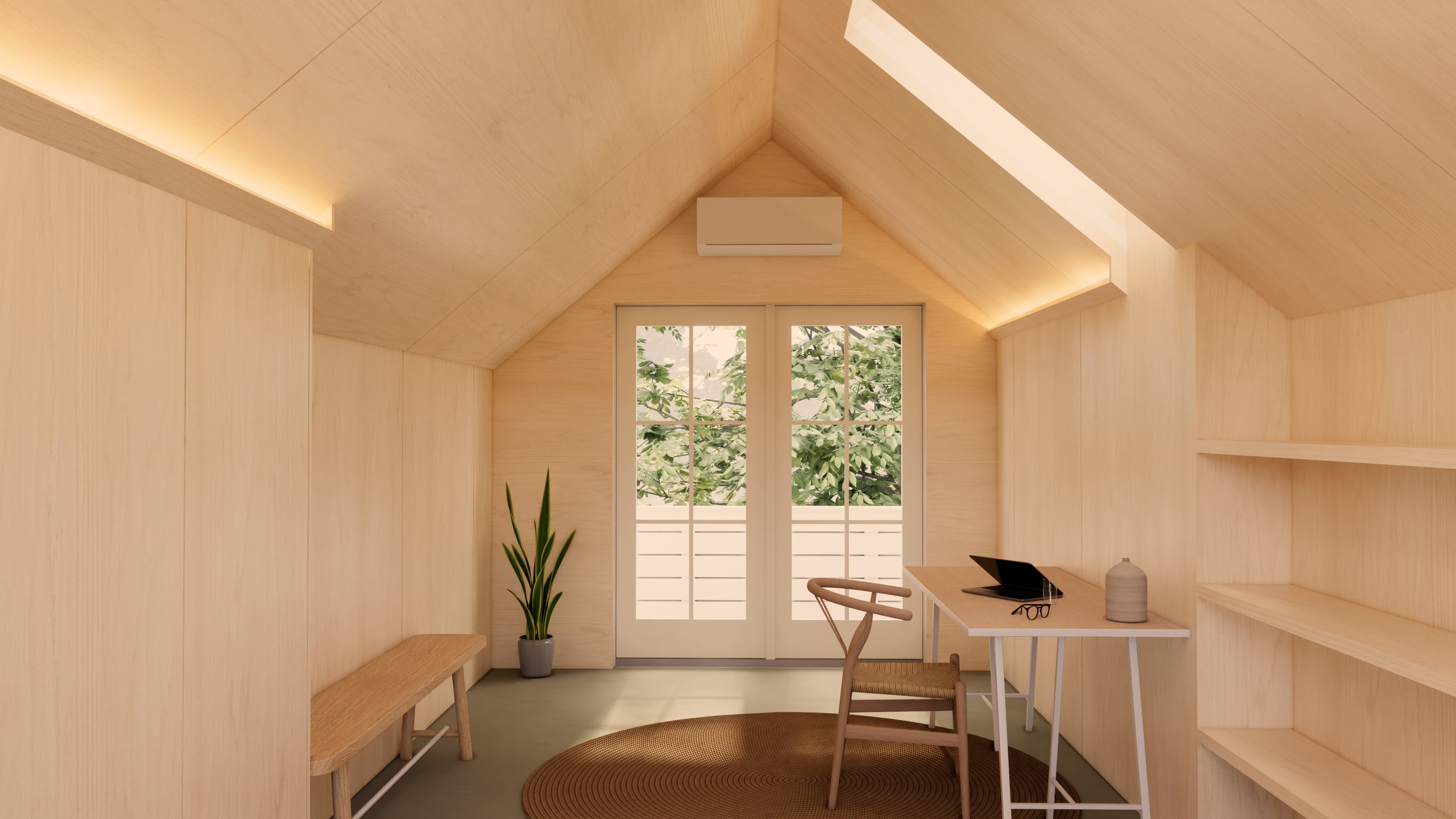
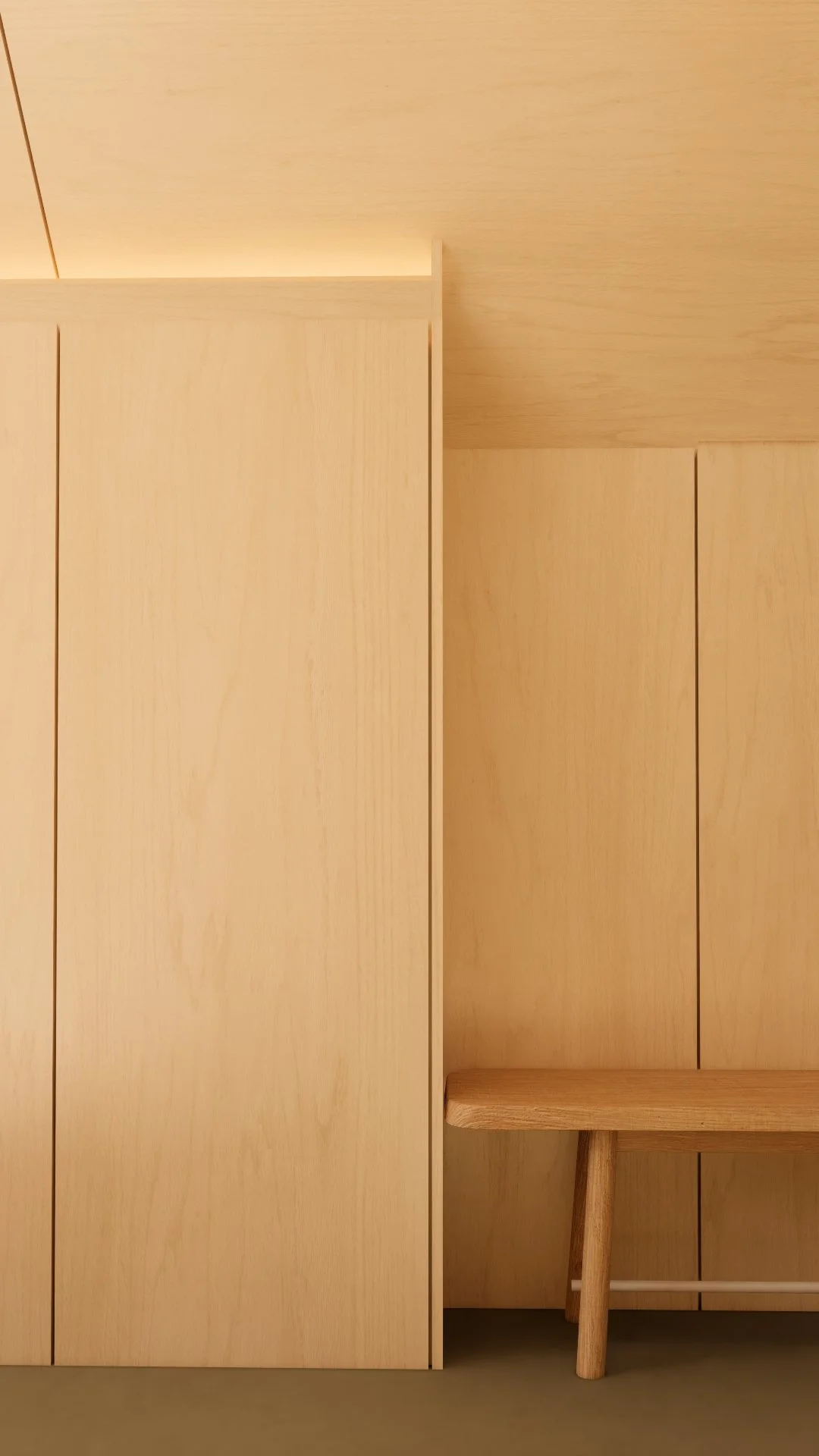
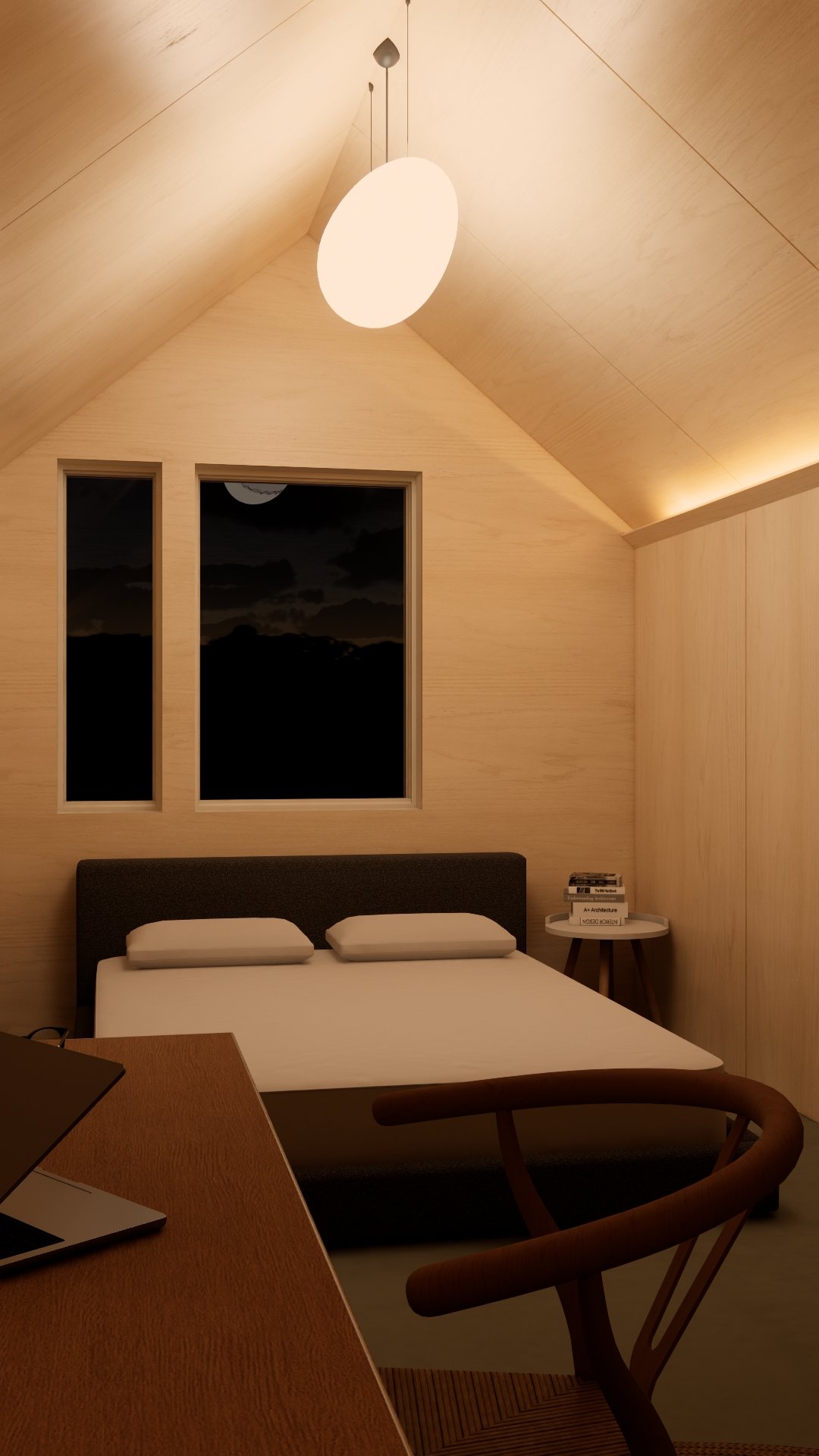
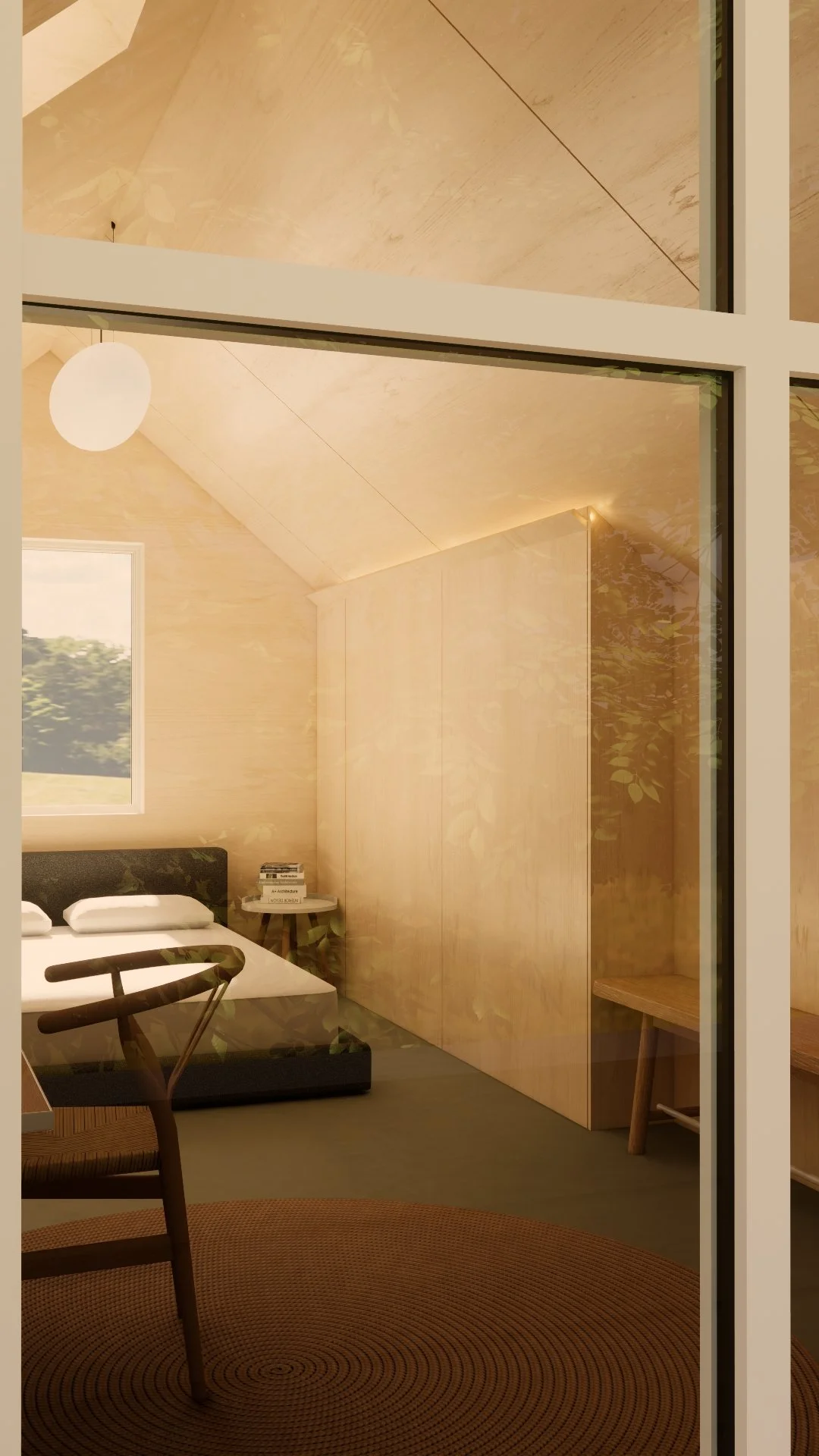
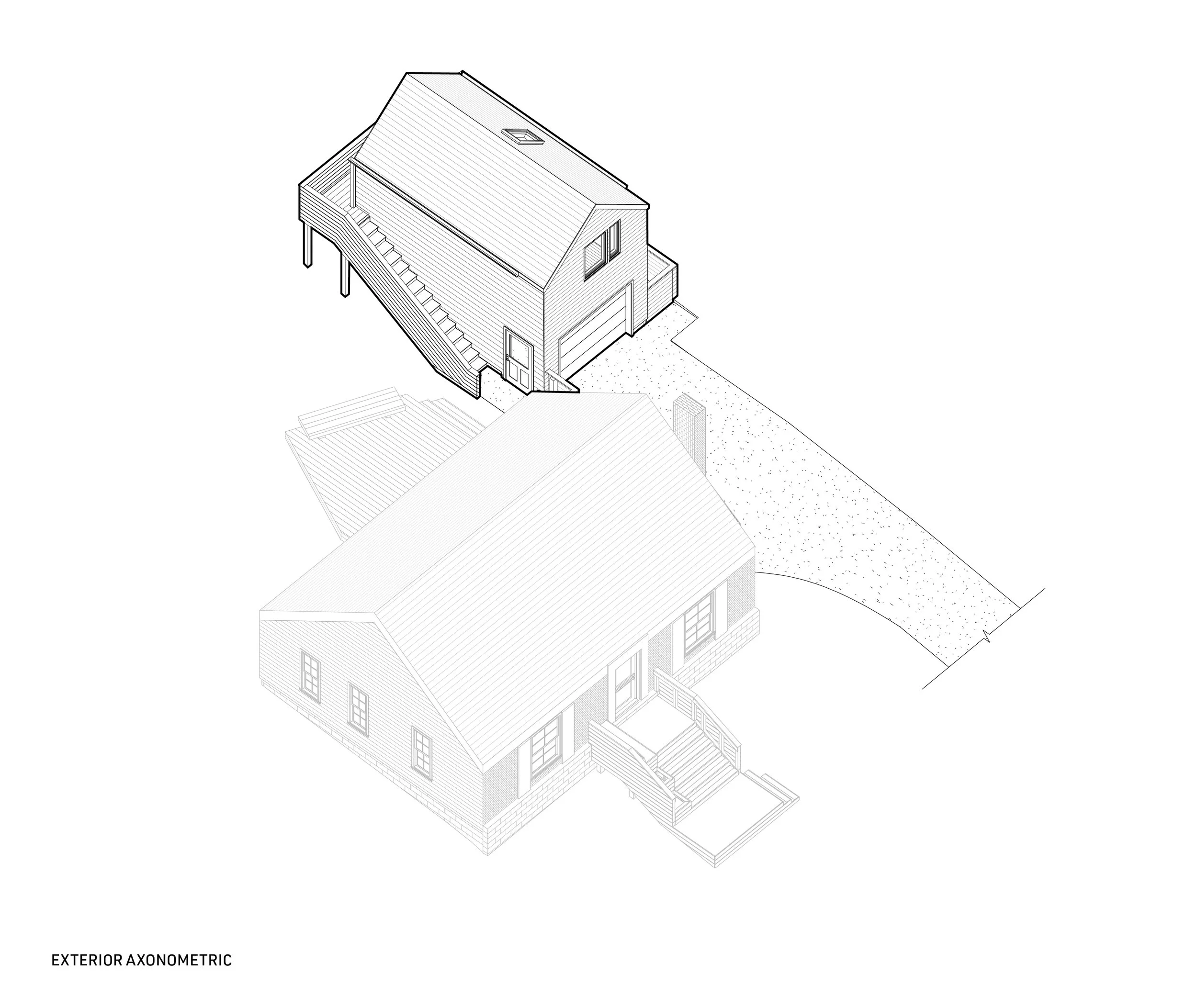
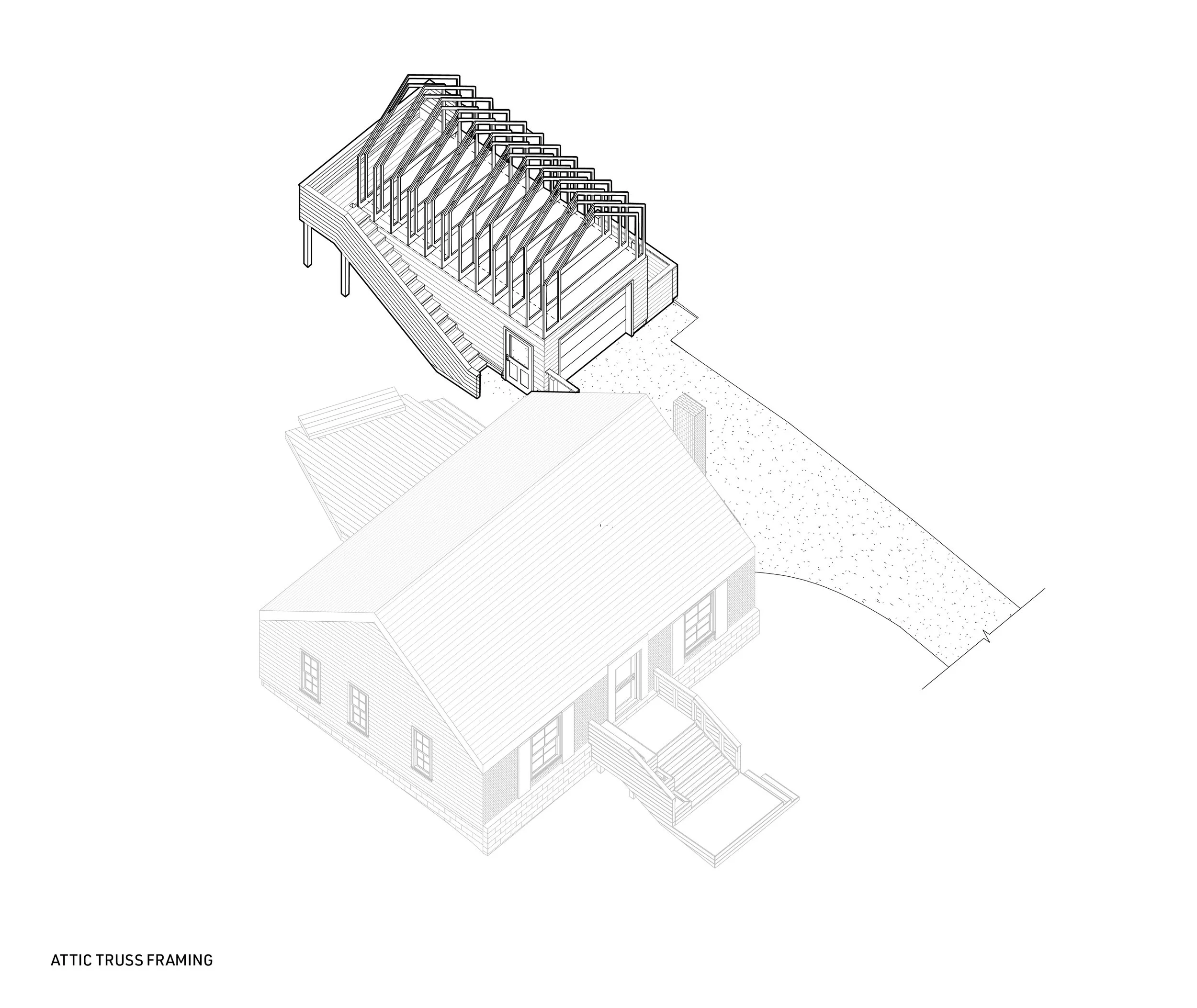
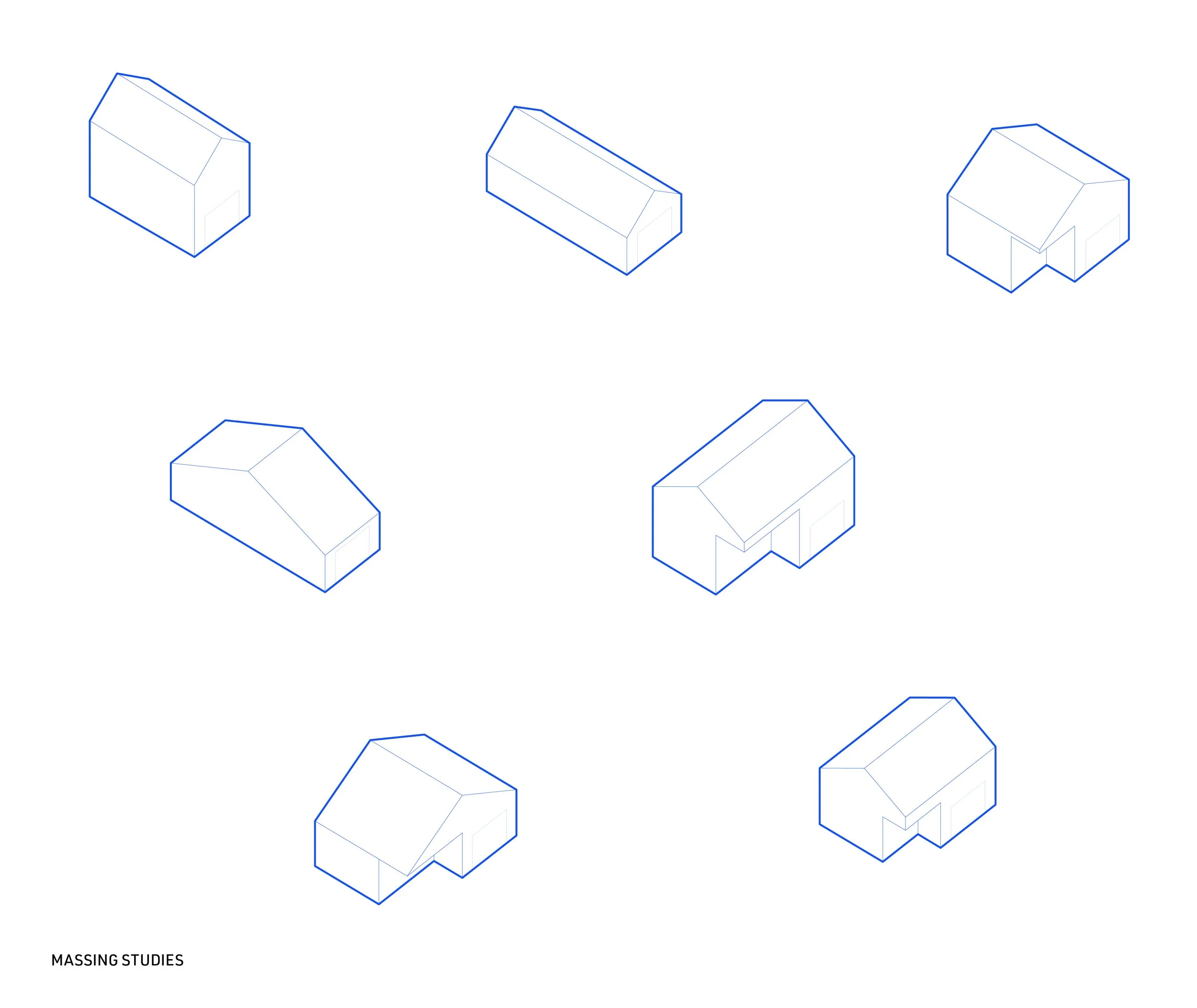
Studio Truss reimagines the attic, traditionally relegated to storage and the occasional raccoon, as a primary site for dwelling, reflection, and creative work. Perched above a new detached garage, the project investigates the latent spatial potential of an attic truss system, transforming an economical structural typology into a light-filled studio and retreat.
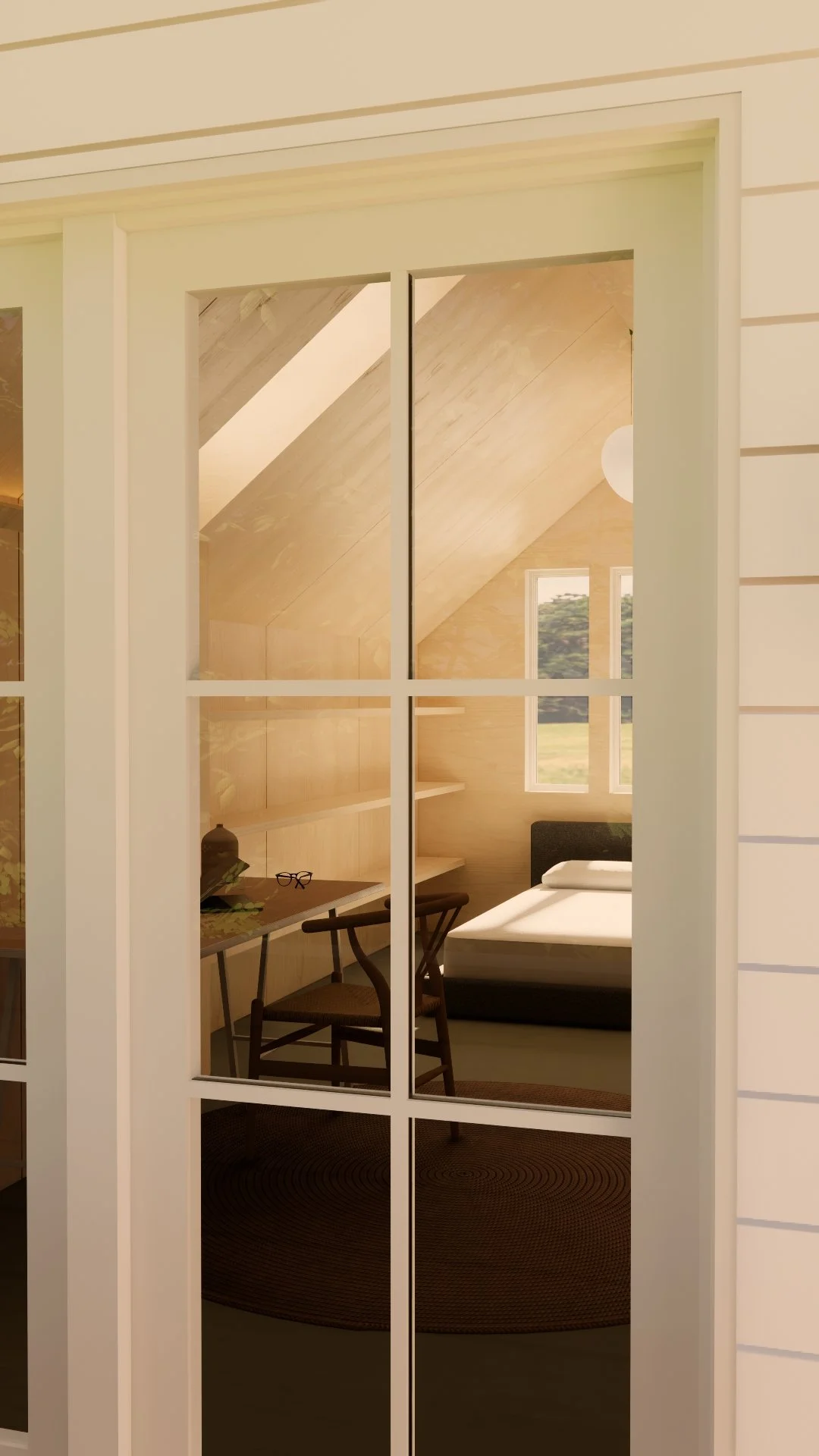
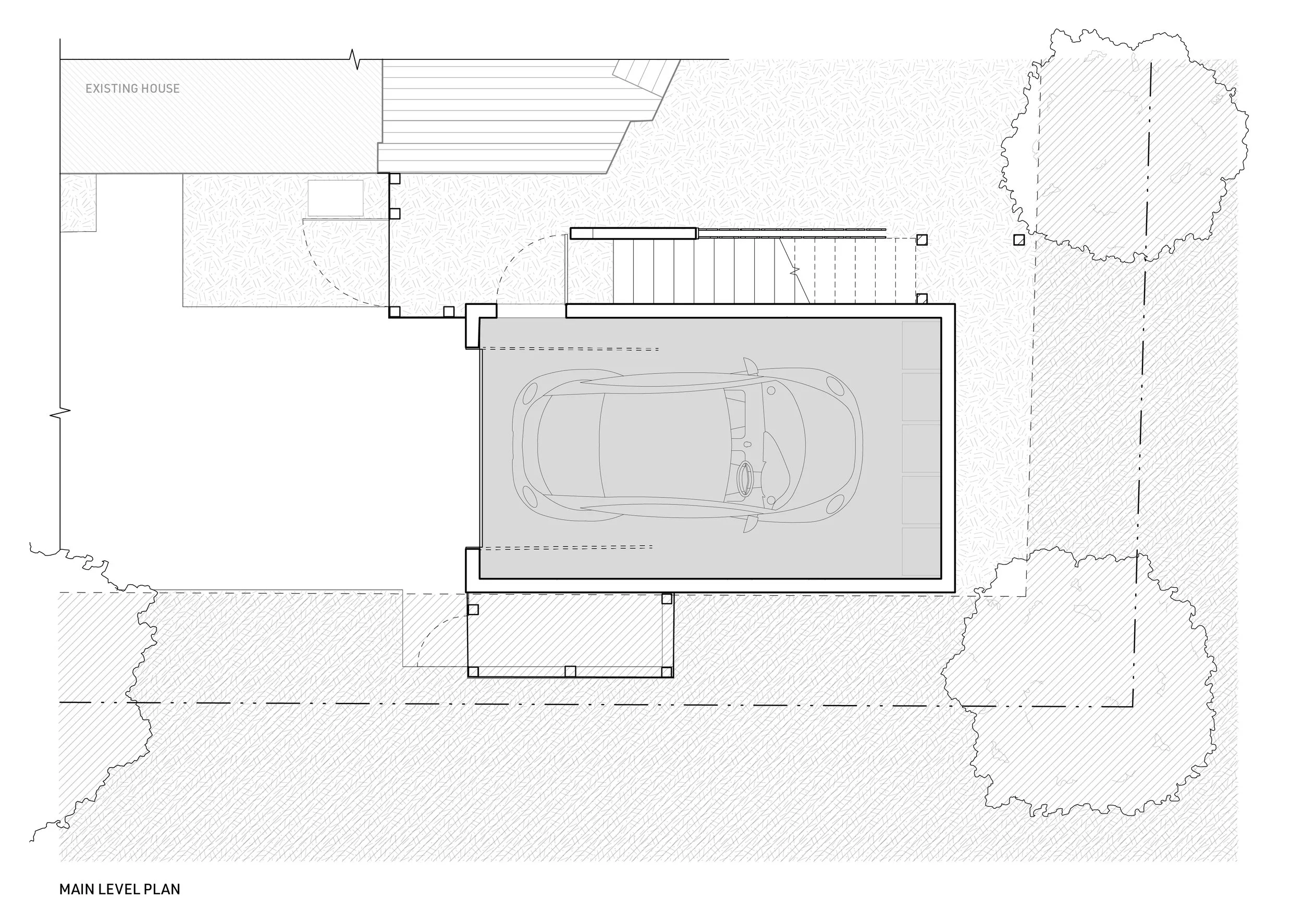
Constructed on the site of a deteriorating garage and shaped by tight setback constraints, the new structure lifts upward to capture views of the backyard and surrounding landscape while maintaining a compact footprint. Its exterior cladding echoes the material language of the existing house and deck, allowing the new volume to read as part of a cohesive ensemble even as its form departs from the original architecture.
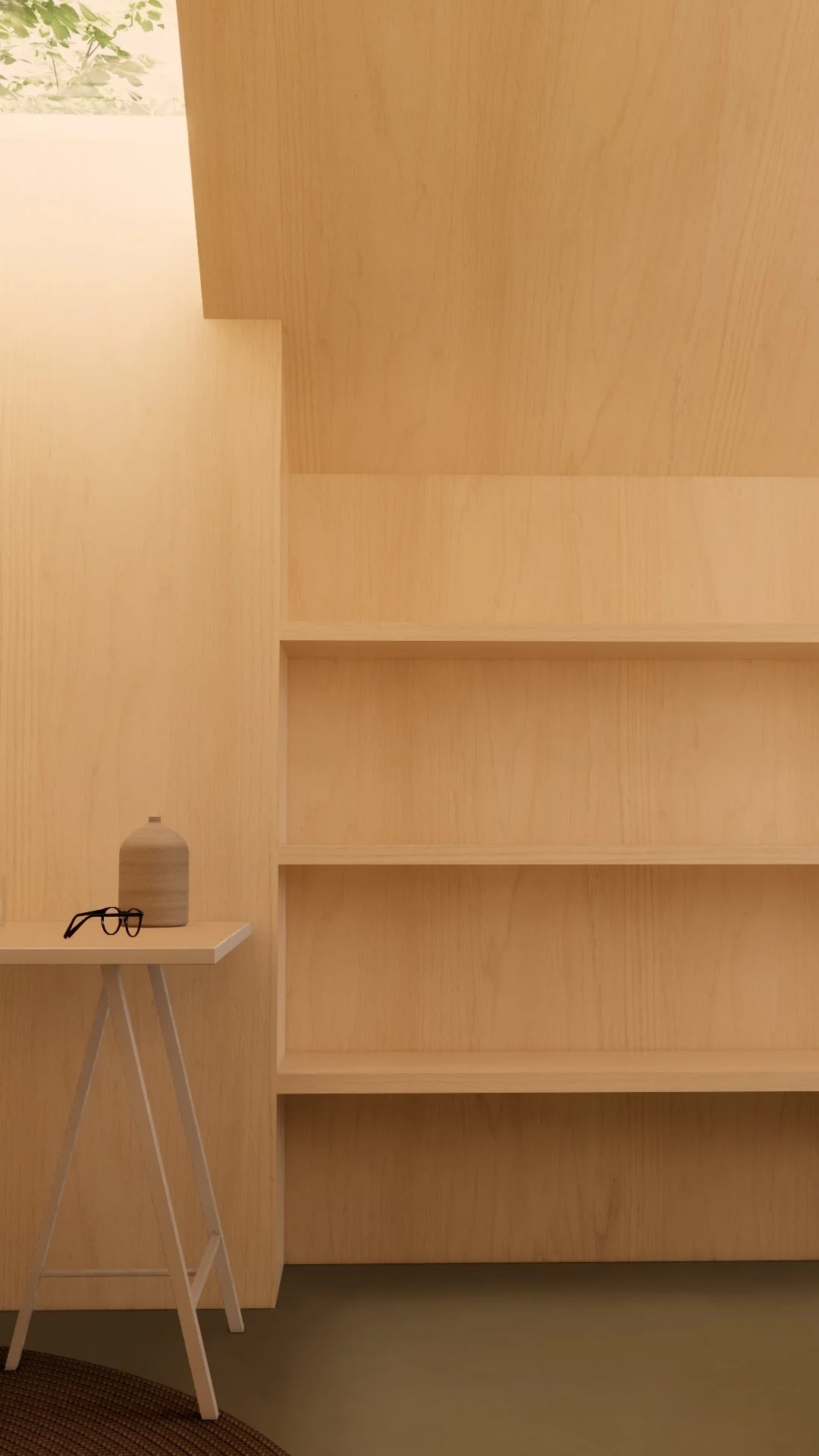
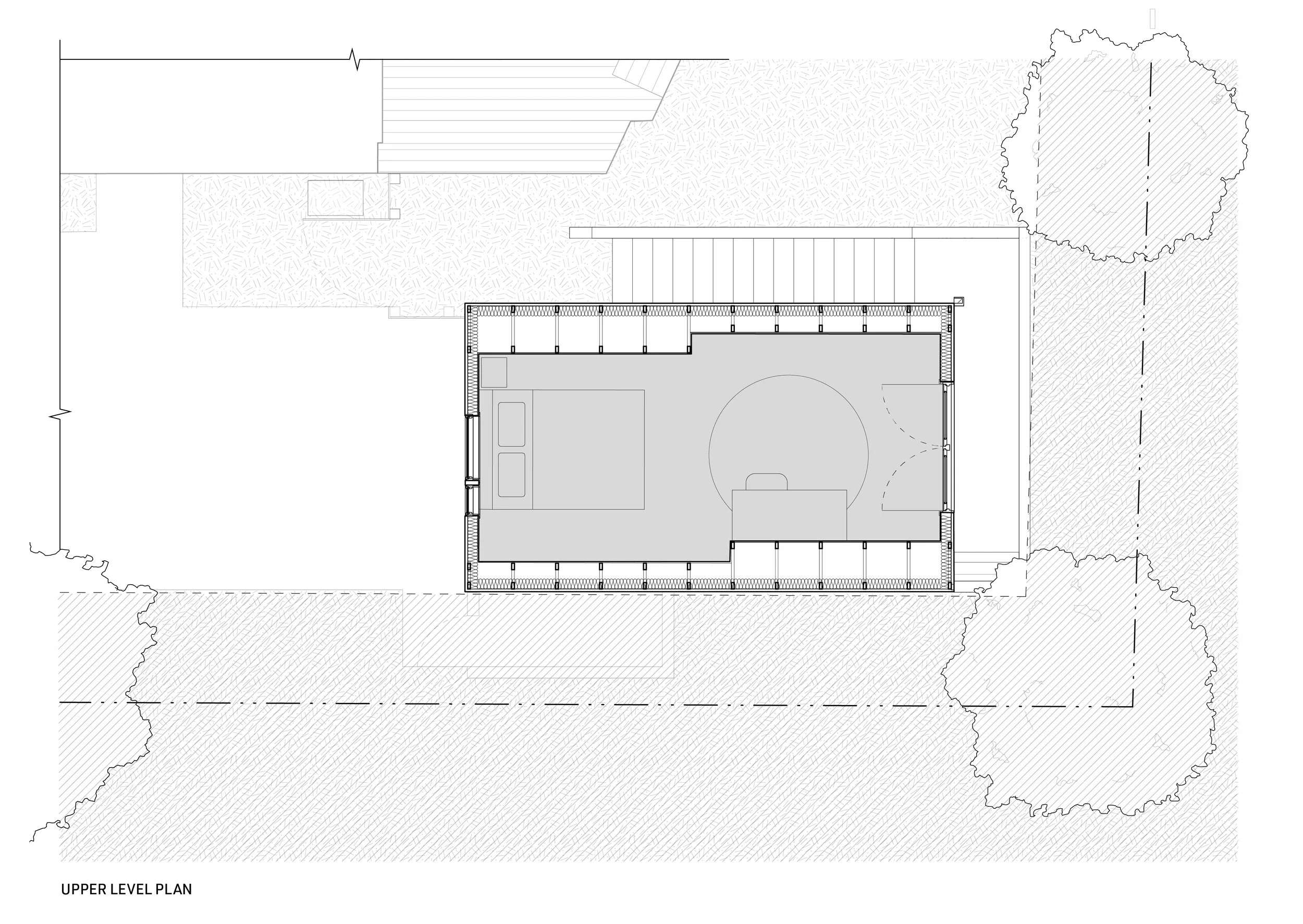
In plan, the truss is subtly articulated through a zig-zag geometry, widening to the south at the west end of the studio and to the north at the east. This calibrated variation in inhabitable width disrupts the tunnel-like quality typical of attic truss spaces, producing a sequence of compression and release. Truss heels are carefully dimensioned to balance structural efficiency with programmatic gain, minimizing material use while recapturing low-clearance areas for built-in storage and flexible furniture arrangements.
At the center of the plan, the vaulted ceiling creates sufficient height for French doors that open onto a small deck overlooking a wooded area beyond. Skylights puncture the otherwise opaque rhythm of the truss, working in concert with east- and west-facing apertures to draw daylight, ventilation, and framed views of sky and canopy deep into the space. Along the perimeter, the inflection where the truss transitions from wall to ceiling is leveraged as a concealed indirect lighting zone, housing LEDs that gently wash the sloped surfaces above.
Through the careful negotiation of structure, economy, and atmosphere, Studio Truss transforms a utilitarian framing system into an inhabitable framework, reframing the attic from residual space into a primary site of dwelling, reflection, and creative work
This project was completed in collaboration with:
Travis Williams - Principal in Charge, Project Architect
Kasey Vliet - Cost Estimation Support
Elpis Wong - Architect
Taylor Boes - Designer
Cody England - Cost Estimating
Joel Masinde - Cost Estimating
Structural Consultant - SDI Structures